

Powder Coating Vs Spray Painting Wheels: Which Finish Is Better?

Choosing between powder coating vs spray painting wheels usually comes down to durability, appearance, repairability & budget. Powder coating is generally the stronger option for a full alloy wheel refurbishment because it creates a tough, even finish with good resistance to everyday road use. Spray painting can still be useful for certain cosmetic repairs, colour matching or situations where a more localised finish is required.
The best choice depends on the condition of the wheels, the result you want & whether the work involves a complete refurbishment or a smaller cosmetic repair.

The Quick Comparison
Powder coating uses a dry powder that is applied to a prepared wheel before being cured with heat. Spray painting uses liquid paint applied in layers, usually followed by a protective clear coat.
In practical terms:
Powder coating is usually more durable
Spray painting can offer greater flexibility for colour matching
Powder coating is well suited to complete wheel refurbishments
Spray painting may be useful for smaller or more targeted repairs
Both methods depend heavily on correct surface preparation
Neither finish will last well if corrosion or damage is simply covered over
For most drivers seeking a long-lasting full-wheel finish, professional powder coating is often the preferred option.
How Powder Coating Works
Powder coating begins with the wheel being inspected & prepared. Existing coatings, corrosion & surface contamination must be removed before the new finish is applied.
A dry, electrically charged powder is sprayed onto the wheel. The powder adheres to the prepared metal before the wheel is placed into a controlled curing process. Heat allows the powder to flow & form a solid coating across the surface.
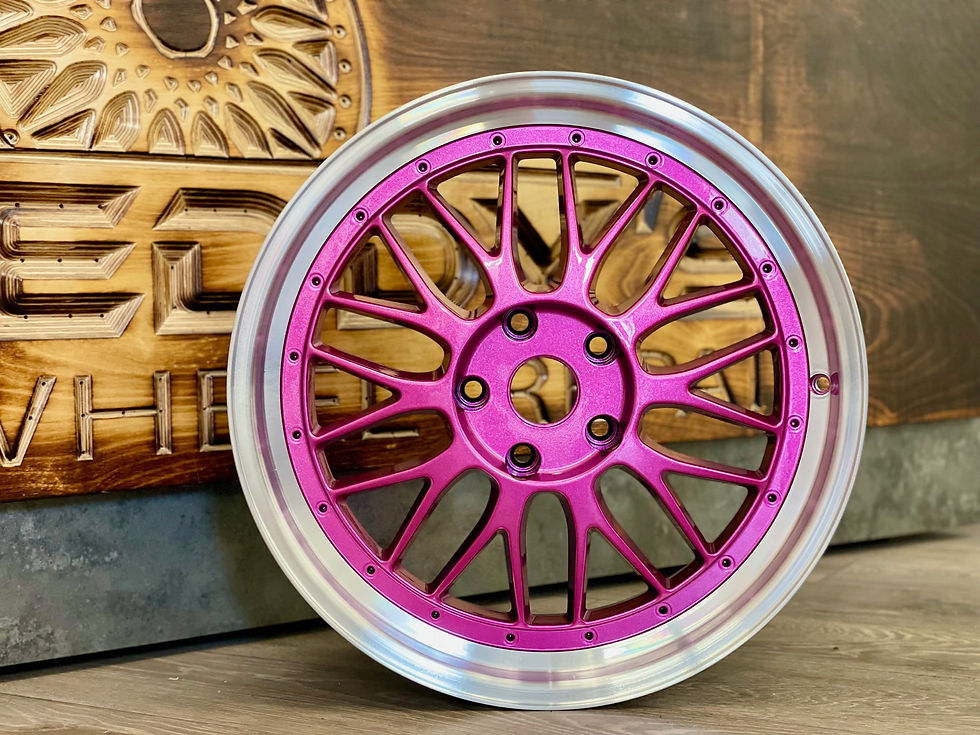
The result is an even, protective finish that is commonly chosen for both restoration & colour changes.
Powder coating is particularly suitable for:
Full alloy wheel refurbishment
Wheels with faded or deteriorated finishes
Drivers wanting a colour change
Complete sets requiring a consistent appearance
Additional protection against road grime & corrosion
How Spray Painting Works
Spray painting uses liquid primer, paint & clear coat applied in separate layers. Each layer must be prepared & allowed to cure correctly to achieve a smooth result.
The process can provide a high-quality appearance when carried out professionally. It may also give the technician more control when matching a particular paint colour or repairing a specific section.
Spray painting can be suitable for:
Localised cosmetic repairs
Colour matching an existing finish
Wheels that are not suitable for heat curing
Certain detailed or multi-stage finishes
Minor visual correction where a complete strip is unnecessary
However, the long-term result still depends on preparation. Applying paint over corrosion, peeling lacquer or contaminated surfaces is unlikely to provide a durable repair.
Which Finish Is More Durable?
Powder coating is normally considered the more durable of the two options.
Once cured, it creates a hard coating that can resist everyday exposure to moisture, road dirt, brake dust & general wear. This makes it a practical choice for wheels used throughout the year.
Spray-painted wheels can also last well when properly prepared, primed, painted & lacquered. However, liquid paint finishes may be more vulnerable to chips or surface damage, particularly if the preparation or curing process is rushed.
Durability also depends on how the wheels are used. Harsh cleaning chemicals, kerb impacts, stone chips & neglected damage can shorten the life of either finish.
Which Option Gives The Best Appearance?
Both methods can produce an attractive result, but they offer different strengths.
Powder coating is valued for its smooth, uniform coverage. It works particularly well when all four wheels are being restored in the same colour & finish.
Common options include:
Gloss black
Satin black
Matt black
Anthracite
Gunmetal grey
Silver
Bronze
Gold
Spray painting may provide more flexibility for complex colour matching, detailed designs or certain factory-style finishes.
The better-looking option is therefore not always the same for every wheel. It depends on the original design, the vehicle & whether the priority is a factory appearance or a customised finish.
Drivers considering a colour change can explore a wider range of powder coating wheel colours & finishes.

Preparation Matters More Than Most People Expect
The quality of the preparation is often more important than the coating itself.
Before either powder coating or spray painting, the wheel should be checked for:
Kerb damage
Corrosion
Cracks
Buckling
Previous poor-quality repairs
Peeling paint or lacquer
Contamination from grease or brake dust
Corrosion should be removed rather than covered. Surface damage should be corrected so it does not remain visible beneath the new finish.
A professional inspection is also important because cosmetic work should not hide structural problems. A cracked or distorted wheel may need welding or straightening before refinishing begins.
What About Diamond Cut Wheels?
Diamond-cut wheels are different from standard painted or powder-coated alloys.
Their bright metallic face is created by removing a very thin layer of alloy with specialist CNC machinery. Painted areas may form part of the design, but the machined face is then protected with lacquer.
A diamond-cut wheel should not automatically be fully powder coated if the owner wants to preserve its original appearance. However, some drivers choose a complete powder-coated finish when further diamond cutting is unsuitable or when they prefer a different look.
The wheel should be inspected before deciding which method is appropriate.
Frequently Asked Questions
Is Powder Coating Better Than Paint For Alloy Wheels?
Powder coating is usually better for durability & complete refurbishment. Spray painting may be preferable for localised repairs, colour matching or certain specialist finishes.
Can Powder-Coated Wheels Be Repaired?
Yes, although the appropriate repair depends on the type & extent of damage. A complete refinish may be needed to maintain a consistent appearance.
Does Powder Coating Prevent Corrosion?
It provides a protective barrier, but no finish can prevent all future damage. Chips, kerb impacts or poor maintenance can allow moisture to reach the alloy.
Can Any Wheel Be Powder Coated?
Many alloy wheels can be powder coated, but they should be inspected first. Existing cracks, distortion or unsuitable previous repairs may need to be addressed.
How Long Does A Wheel Finish Last?
There is no fixed lifespan. Preparation quality, road use, cleaning methods, impacts & maintenance all affect how long the finish remains in good condition.

Choosing The Right Finish For Your Wheels
Powder coating is often the stronger choice for motorists who want a durable, consistent finish across a complete set of alloy wheels. Spray painting remains useful where colour matching, detailed work or a smaller cosmetic repair is required.
Before deciding, consider the wheel’s condition, its original finish & how you use the vehicle. A proper inspection can identify corrosion, cracks or distortion that may affect the recommended process.


Comments